
Song Styles
Custom Song in Spanish for Someone You Love
How to get a custom song in Spanish: asking for Spanish or English lyrics, Latin vs reggaeton, keeping family nicknames, and who it's for.
By Seb, founder of Only Happy Tears5 min read
In this article
Some love only sounds right in Spanish: the way your grandmother says mija, or how your dad's voice changes when his brother calls from home. A song in that language reaches a place English doesn't.
To get a custom song in Spanish, answer the quiz in Spanish, or answer in English and ask for it plainly: "Write the song in Spanish." Any genre can be sung in Spanish; Latin and Reggaeton give it that sound. Keep the nicknames you use at home, and choose the language of the person who will hear it.
Start with who will be listening
In a bilingual family, the first decision is whose language the song speaks. The person giving the gift and the person hearing it don't always think in the same one.
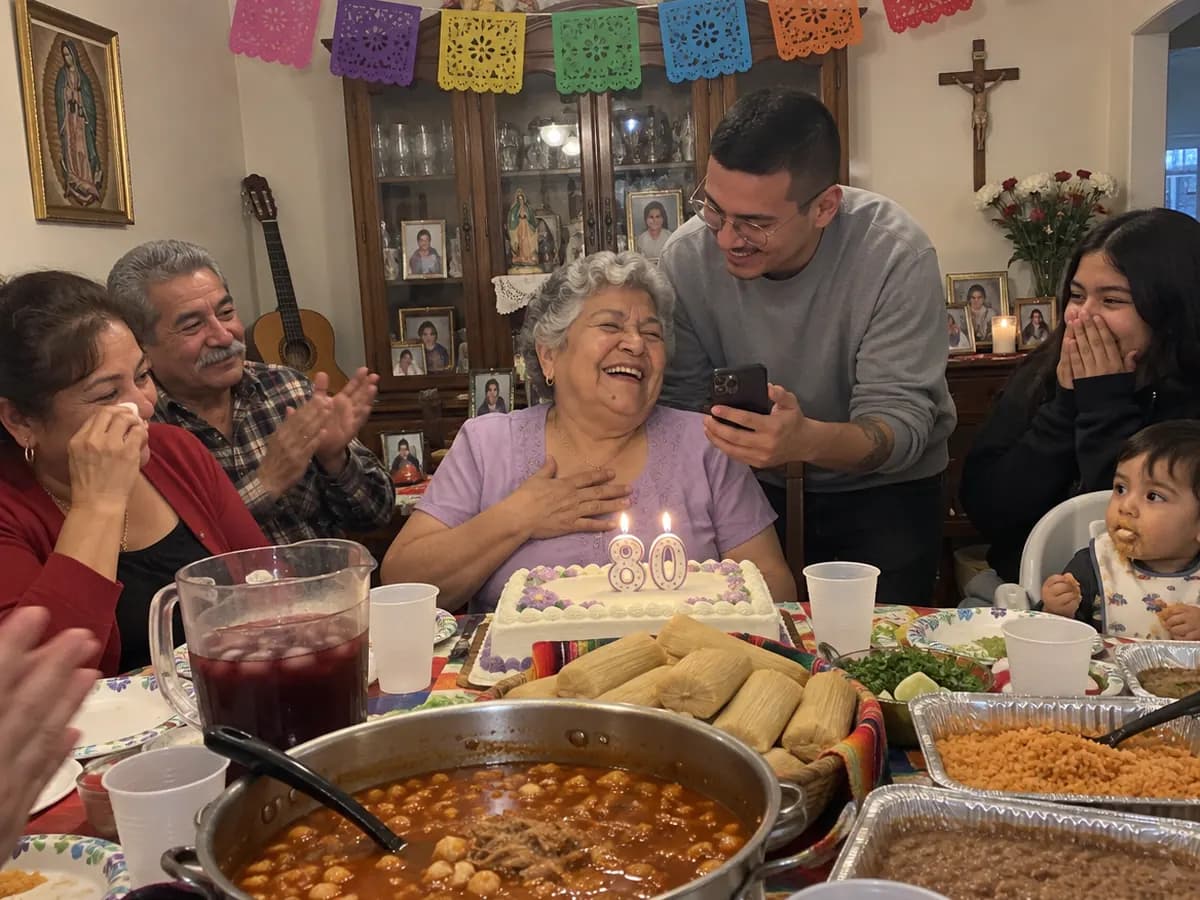
Say your grandmother came from Michoacán fifty years ago. She handles the bank and the doctor in English, but she prays, scolds and tells stories in Spanish. Her grandkids grew up answering her in English. A song for her 80th birthday from those grandkids still belongs in Spanish, because it's for her.
Now flip it. Say you're a mom who speaks Spanish at home, and your son, raised in Texas, texts you back in English. A song for his graduation may land best in English, keeping the one word he would never let you translate: the nickname you've called him since he was small.
A quick rule for choosing the language
- Follow the feeling. Gratitude toward a parent usually lives in the language of the house you grew up in. Love for a partner lives in the language you fell for each other in.
- Listen for the private moments. If they count, pray or talk to the dog in Spanish when nobody's listening, Spanish is the language of their heart.
- Honor the person, not the room. For a song from the whole family, choose the language of the person being celebrated, even if most of the guests speak the other one.
- Break a tie with your own habit. If they move between both without thinking, choose the one they use with you.
Listen to a song in Spanish
How to ask for Spanish or English lyrics
The song is written in the language you answer in. Answer the quiz in Spanish and you get a Spanish song; answer in English and you get an English one. That's the starting point, and you can change it.
- Answer in Spanish. If Spanish is your easiest language, write every answer in it: the memories, the dedication, the way she laughs at her own jokes. The song follows.
- Answer in English, ask for Spanish. If your Spanish is rusty, or you simply write better in English, say it in one of your answers. A plain request for Spanish wins over the language you typed in.
- Answer in Spanish, ask for English. It works the other way too, for a mom who writes in Spanish to a son who listens in English.
- Pick Latin or Reggaeton. For these two genres, the quiz also asks whether the song should be in English or Spanish, so you choose it directly.
Here is a short request you can adapt and paste into an answer:
Please write the song in Spanish. It's for my grandmother, Abuela Chela, who grew up in Michoacán. Spanish is her first language, and it's the language she sings in at the stove.
Songs are written in English or Spanish, and in no other language. Pick one for the lyrics and say it once, clearly. In a bilingual family, leaving it to chance is how a grandmother ends up with a song she has to ask someone to translate.
Latin or reggaeton: choosing the sound
The genre never decides the language. A Spanish song can be Acoustic, R&B, Country or Worship if that's what the person plays. If you want it to sound Latin, though, the quiz has two quite different options.
Latin
Latin is the warmer, wider one: nylon-string guitars, hand drums like congas and bongos, shakers, sometimes a piano or a horn line. It can be slow and romantic, a song for holding someone close, or quick enough to pull the whole family up to dance. Say in your answers which one you picture.
It suits grandparents, parents and long marriages: people whose music played at family parties long before anyone had a playlist. The era shapes it further. An older decade like the 60s or 70s leans toward slow, guitar-led romance, the 2010s and 2020s sound polished and current, and Timeless doesn't point at any decade.
Reggaeton
Reggaeton is built on one rhythm: a heavy, looping drum pattern with a stuttering, off-beat snare, over deep electronic bass. The vocal slides between singing and rapping, and the chorus is short enough to shout. It's made for dancing and it sounds young, so it suits a cousin, a teenage daughter, a boyfriend or a birthday with the speaker turned all the way up. It's a newer sound, so pair it with the 2000s, 2010s or 2020s.
When neither one fits
If Abuela finds loud music tiring, skip Reggaeton however much the grandkids love it. If the heart of the song is faith, choose Worship and ask for Spanish. If it's a quiet love song for your wife, an Acoustic song in Spanish keeps it close and simple.
Keep the names you use at home
Bilingual families run on nicknames: Mamá Lupe, Tata, Güelo, Nena, Flaco, mija. They carry more love than any full name, and they don't translate.
Names and nicknames are sung as written, in either language. An English song for your grandfather can still call him Tata, and a Spanish song for your son can still call him Danny if that's what everyone says. Write each one exactly as your family spells it, accents included.
Before you open the quiz, write down:
- What each person in the song is called at home, spelled the family's way.
- The town or neighborhood they came from, by its real name: the ranch outside Zacatecas, the street in Ponce, the corner in East LA.
- The food that means home, and who makes it: the tamales every December, the café con leche at the kitchen counter.
- The music that played in the house, like the radio on Saturday mornings while everyone cleaned.
- The blessing or goodbye they always say, word for word, if the song will be in Spanish.
- Who the song is from, with every name, so nobody in the family is left out.
Say the song is for your dad from you and your sisters. He's Papi to you, Ernesto at work and Neto to his brothers. Choose the name that makes him look up from his plate, and give the others a line if they matter to the story. One song can include several names.
Ready once the language is settled
When you know whose song it is and which language it speaks, start their song in Spanish. The quiz takes about three minutes. Answer in Spanish, or in English with your request written plainly, and we write their song from your answers. To see the whole gift first, here's how an Only Happy Tears song works.
Hear it before you pay. When it's right, it's yours to download and keep forever, ready for the next Sunday dinner at Abuela's table.
Frequently Asked Questions
Do I need to speak Spanish to order a song in Spanish?
No. You can answer every question in English and say in one of your answers that you want the song in Spanish. That request wins over the language you typed in. If you choose Latin or Reggaeton, the quiz also asks whether the song should be in English or Spanish. Spell names and nicknames the way your family writes them, since they're sung as written.
Can a country or R&B song be in Spanish?
Yes. The genre never decides the language. The song is written in the language you answer in, or the one you ask for in your answers, so a Spanish song can be Country, R&B, Acoustic, Worship or another genre on the list. Choose the genre the person plays at home first, then settle the language separately.
Can I get a custom song in Portuguese or another language?
No. Songs are written in English or Spanish, with no other languages. If your family speaks something else at home, you can still bring it in through names, because names and nicknames are sung as written. A grandmother called Vovó or Nonna can keep that name inside an English or Spanish song.
Is a song in Spanish a good gift for a quinceañera?
It can be a lovely one. Choose Birthday as the occasion and tell the story of her fifteen years in your answers. Reggaeton suits the party, while a slower Latin song can carry a quieter moment with her father or grandparents. The song downloads as an MP3 you can hand to the DJ, and personal use covers playing it at family events. Leave time for revisions before the day.
How do I give the song to a grandparent who isn't comfortable with phones?
Play it for them in person. Download the song, sit beside them and play it through a speaker at the table, or put the phone in their hands with the volume up. Tell them who it's from before it starts, have the grandkids close by, and give them room to listen to the end before anyone says a word.
Seb, founder of Only Happy Tears
Music has carried all of us through the hard days and the happy ones. I started Only Happy Tears after writing a song for my family to tell them how grateful I am. Their first reaction was happy tears. Now I want everyone to be able to give that moment to the people they love, at a price anyone can afford and with no subscriptions.