
Song Styles
Custom Jazz Song for an Anniversary or Birthday
Plan a custom jazz song for an anniversary or birthday: stories that suit it, the 60s or Timeless era, a smooth voice, and when to pick another genre.
By Seb, founder of Only Happy Tears5 min read
In this article
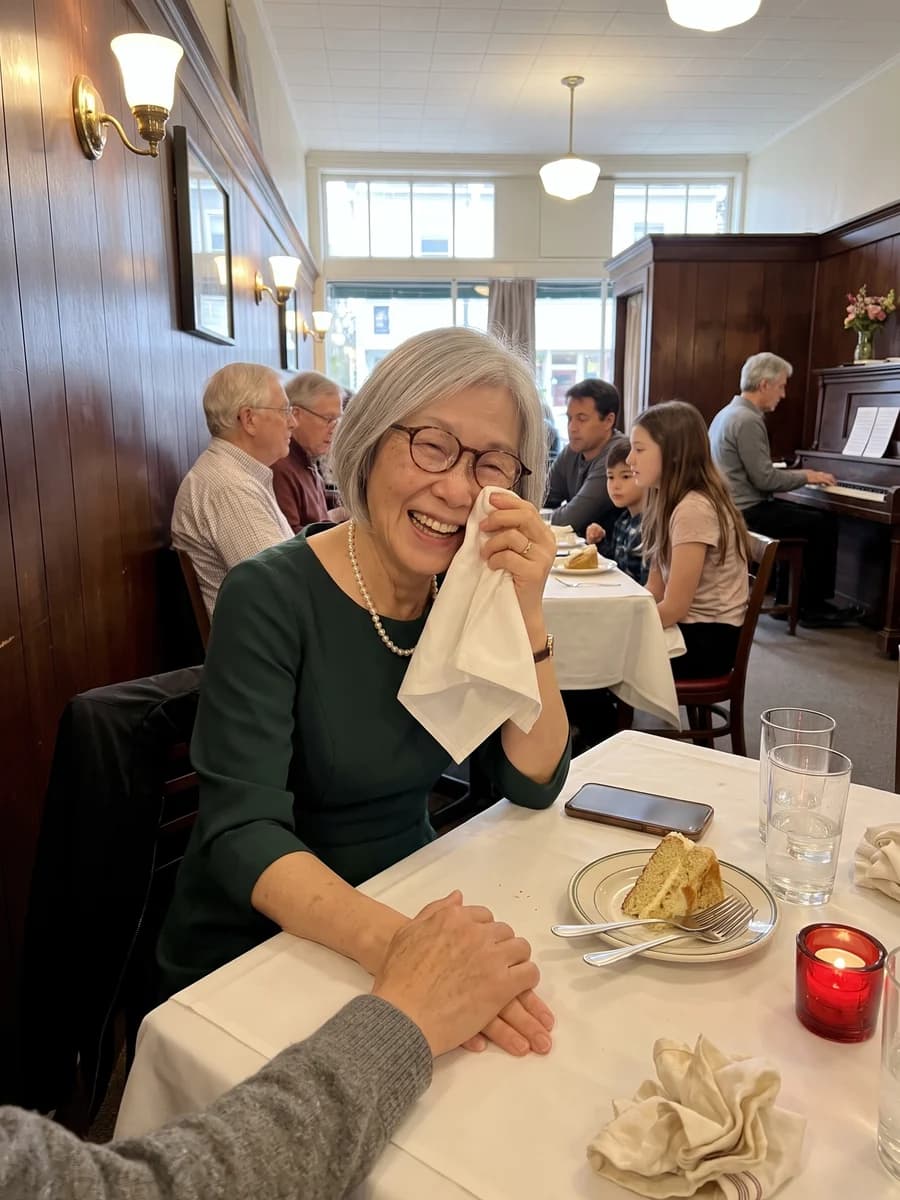
Picture a table for two, the lights low, a piano somewhere across the room, and a song about the two people sitting there. Jazz is the sound of an evening someone planned with care.
A custom jazz song fits an anniversary or birthday that should feel like a good dinner out: unhurried, warm and a little dressed up. It suits long marriages and parents who grew up on standards. Choose the 60s or Timeless era, a smooth voice that fits who's singing to whom, and stories that can take their time.
Jazz, in plain musical terms
A jazz song usually rests on a small band: a piano, an upright bass walking from note to note, drums played with brushes instead of sticks, and sometimes a saxophone or a muted trumpet answering the singer between lines. The chords are richer than in pop. Notes lean against each other and then settle, and that pull is where the late-evening warmth comes from.
The singing is relaxed. A jazz vocal often sits a hair behind the beat, stretches a word, then catches up. The lyric sounds like conversation with good manners: warm, a little witty, and happy to circle one idea instead of telling a long story in order.
That's why it flatters people with years behind them. A jazz song doesn't hurry to the chorus, and a long marriage doesn't need to either.
Listen to a jazz song
Where a jazz song belongs
Jazz is at home in a few specific settings. Plan the song around the one you're giving it in.
The anniversary dinner
Build the song around the dinner itself: the restaurant you return to every year, the dessert you always split, the toast one of you always makes and the other always teases. Play it from a phone on the table between the main course and dessert, when the conversation slows.
A long marriage
At twenty-five, forty or fifty years, the story is too long to tell in order. Jazz doesn't try. It picks one habit that has outlasted everything, like the porch light left on for whoever gets home last, and lets the slow tempo say the rest.
Parents who grew up on standards
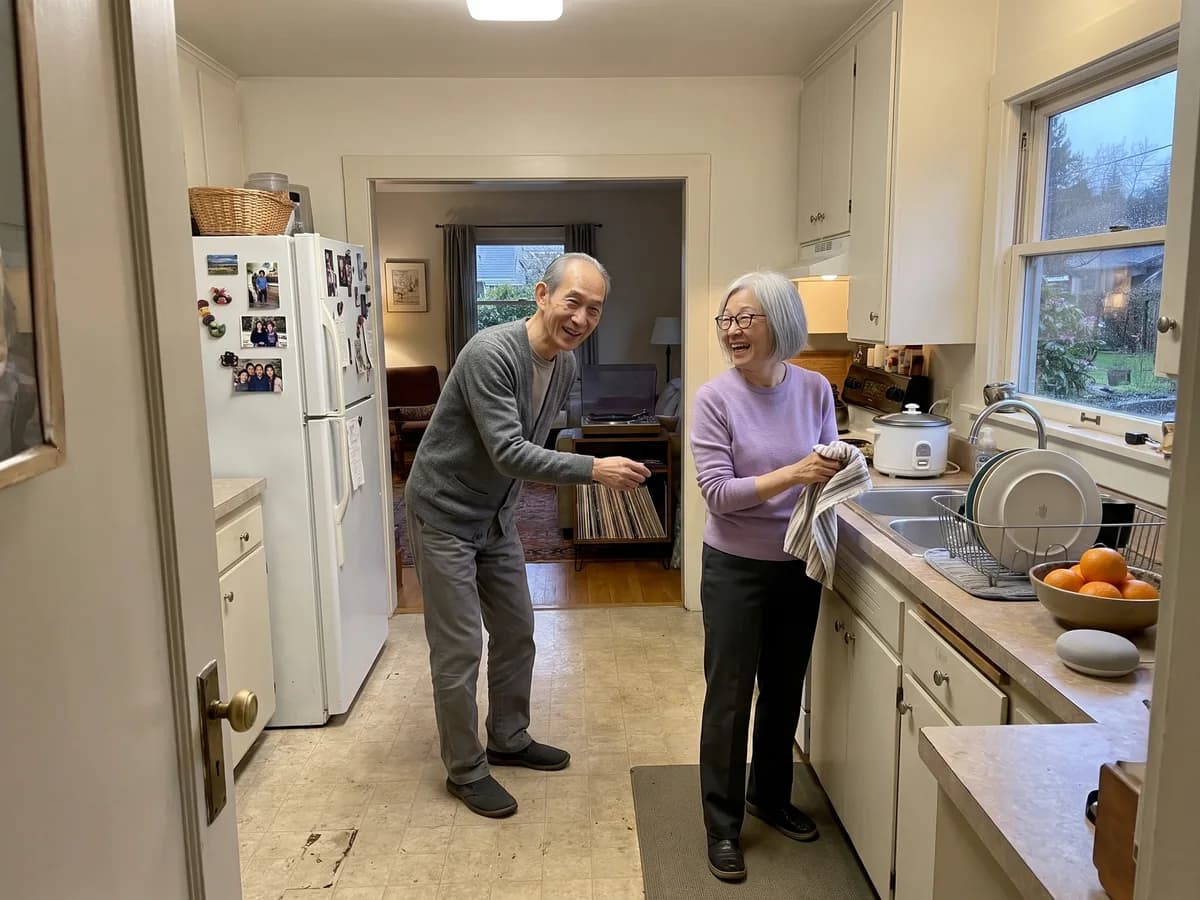
If your mom hums old standards while she cooks, or your dad still owns a turntable and a stack of records older than you, jazz may be the music they hear as romance. A song from the kids in that sound, about their own marriage, can feel like a record they somehow never owned.
A birthday with a dress code
Jazz suits a 60th, 70th or 80th birthday dinner for someone with a bit of style: the grandmother who wears lipstick to the grocery store, the uncle who owns three good hats. Ask for something lighter and swinging, and let the lyric tease them a little about the number.
Stories that suit a slower, warmer song
A slow song gives every line room, so choose details that reward a second listen. Jazz likes scenes with texture: a coat held open, a city at night, a joke told for the four-hundredth time. Busy timelines, loud adventures and lists of achievements fit better in other genres.
Seven questions to answer before you start
- Where did they first dance, or where would they have, if one of them could dance?
- What does one of them order every single time, and what does the other one say about it?
- Which small courtesy never stopped? He still walks on the street side; she still warms the car on winter mornings.
- What private joke have they been telling for decades, and how does it start?
- What did the hardest year look like, in one sentence, and what got them through it?
- What music played in the house when you were small, and on which night of the week?
- If you had to stand and toast them tonight, what would your first sentence be?
Say your parents met at a cousin's wedding, where your dad asked the band for a slow song so he'd have an excuse to ask her to dance. Forty-two years later he still says "May I?" before every dance in the kitchen. That's the song: the excuse, the question, and the fact that he never stopped asking. Put the whole story in the memories and save your toast for the dedication.
The 60s or Timeless, and a smooth voice
The era shapes the sound around the story. For jazz, two choices do most of the work.
The 60s give jazz a polished supper-club feel: a piano trio with brushed drums, maybe a soft horn, and a singer who sounds dressed for the evening. Choose it for parents who came of age then, or for anyone whose idea of romance involves a tablecloth and a candle.
Timeless takes the decade away: piano, bass, brushes and a voice. It's the safest pick for a 50th anniversary song you'll want to play again at the 60th, and for a couple whose taste doesn't sit in any one era.
The quiz also has the 70s through the 2020s. A later era tends to give jazz a cleaner, more modern finish, which can suit a younger couple who love the mood but not the vintage.
Choosing the voice
The quiz offers a female voice, a male voice or either. For jazz, ask who is doing the serenading. A husband's song for his wife's 70th sounds most like him in a male voice, as if he's asking her to dance. A daughter's song for her parents' anniversary can suit a female voice, low and warm. Whichever you choose, say in your answers that you want it smooth and unhurried.
When another genre fits better
Jazz is a specific taste. Before you choose it, check the person against this list.
- They grew up on soul, not jazz. If the records in the basement are soul and harmony groups, R&B with the 60s or 70s era may feel closer to home.
- The party is for dancing. Jazz can swing, but for a floor full of cousins and grandkids, Pop or Rock keeps people moving longer.
- The story is rural and plainspoken. A farm, a pickup and a hometown church belong in Country.
- They find jazz fussy. If they'd call it background music, an Acoustic song keeps the closeness without the cocktail hour.
Set the table, then start the song
With your seven answers in hand, start their jazz song. Choose the occasion, pick Jazz, then the 60s or Timeless, and the voice. We write their song from your answers. To see the full gift first, read what comes with an Only Happy Tears song.
Add a wedding photo and it becomes a portrait made of the lyrics, ready to print and frame for the hallway. Pay only when you love it.
Frequently Asked Questions
What is a jazz standard?
A standard is an older song that musicians keep returning to, recording and reworking it decade after decade. Many came from stage musicals and films of the early and mid 1900s, and they share warm melodies, rich chords and clever, conversational lyrics. A custom jazz song is new and written about your people, so it can share that feel without borrowing any standard's words or melody.
What's the difference between jazz and blues?
They're close relatives. Blues is simpler and rawer: a repeating chord pattern, often led by guitar, with lyrics about trouble, longing and getting by. Jazz grew partly out of it and went somewhere more elaborate, with richer chords, walking bass, brushed drums and room for piano and horns. Blues isn't its own genre in the quiz. For a bluesy, guitar-led sound, Rock with the 70s era may land closer; for something warm and polished, choose Jazz.
Can a custom jazz song sound like the records my parents love?
It can share the feel of that music, but it won't copy a song or imitate a singer. Choose the era they grew up with, like the 60s, and describe the mood you want in your answers: slow and romantic, or light and swinging. Then fill it with their own story. The details are what will make it sound like theirs.
Is jazz a good choice for a 50th wedding anniversary?
Often, yes. Fifty years is a long, unhurried story, and jazz is an unhurried genre. It suits an anniversary dinner, or a party where the couple takes one slow turn on the floor while everyone watches. Choose Timeless if you want the song to age as well as they have, and give it details from across the decades, not only the wedding day.
Is a jazz song a good choice for a vow renewal?
Often, yes. A vow renewal tends to be smaller and quieter than the wedding was, and a slow jazz song suits a couple dancing in front of the people who watched them marry the first time. Choose Anniversary as the occasion and describe the renewal in your answers. The song downloads as an MP3 you can hand to whoever runs the music. Leave time for revisions before the day.
Seb, founder of Only Happy Tears
Music has carried all of us through the hard days and the happy ones. I started Only Happy Tears after writing a song for my family to tell them how grateful I am. Their first reaction was happy tears. Now I want everyone to be able to give that moment to the people they love, at a price anyone can afford and with no subscriptions.