
Gift Ideas
Thank You Gift for Mom From Her Grown Kids
A thank you gift for Mom from all her grown kids: how each sibling finds a memory, how to name what she gave up, and how to play it at a family dinner.
By Seb, founder of Only Happy Tears5 min read
In this article
Somewhere along the way you grew up enough to see what it cost her: the extra shifts, the car she drove for fifteen years, the trip she kept saying she'd take later. She has never once brought any of it up, which is exactly why her kids should.
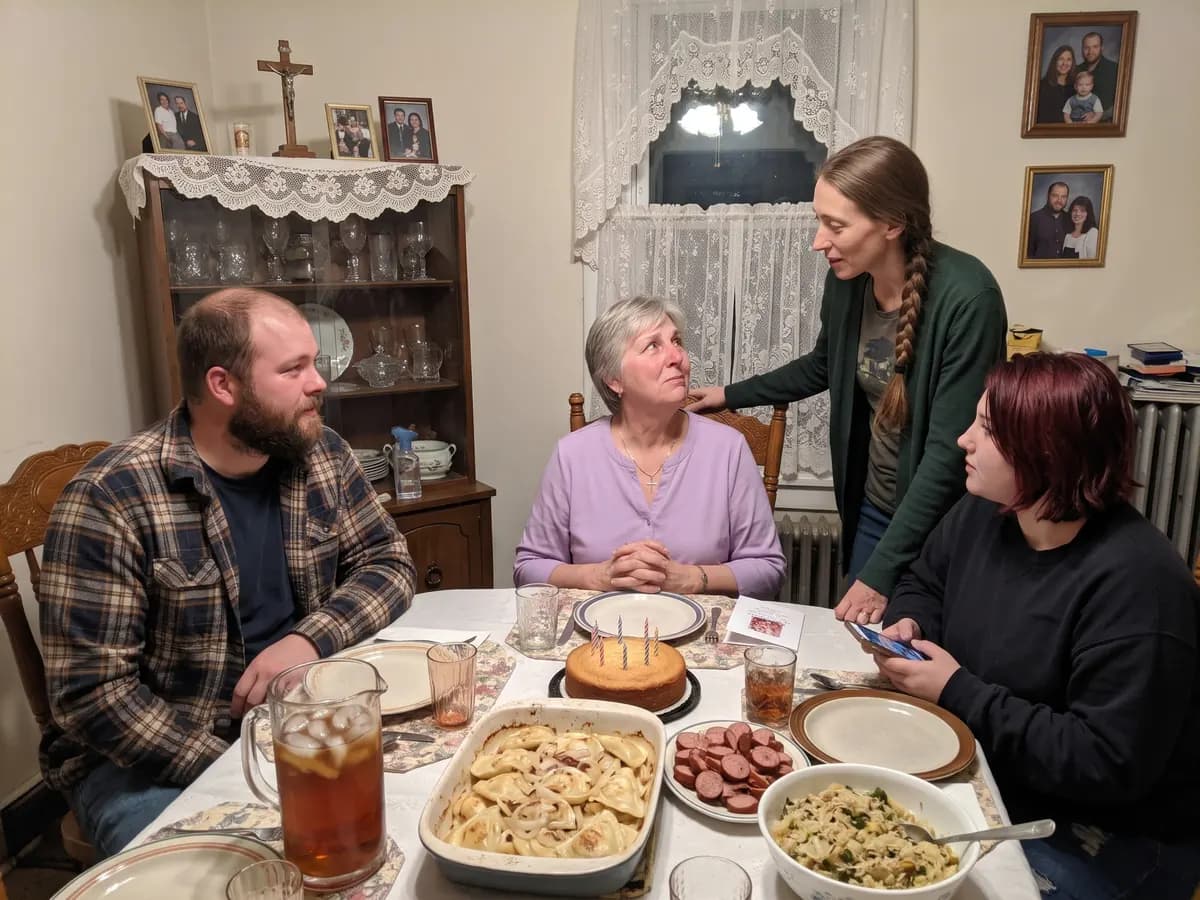
The thank you gift for Mom that lands is one her grown kids make together: a song that names what she gave up and never mentioned. Each sibling brings one memory, the memories go into one song, and every one of you says thank you out loud at a family dinner before anyone presses play.
What grown kids can see that little kids couldn't
When you were eight, dinner appeared, the field trip money was in the envelope and the costume was finished the morning of the school play. You didn't wonder how. Now you pay your own bills, maybe raise kids of your own, and you can finally do the math on what all of that took.
That hindsight is what gives a thank you from grown kids its weight. A card at seven said "thanks for being a great mom." A thank you at thirty-five can say "I know now what you did, and that you did it without telling us." She may never have expected to hear it at all.
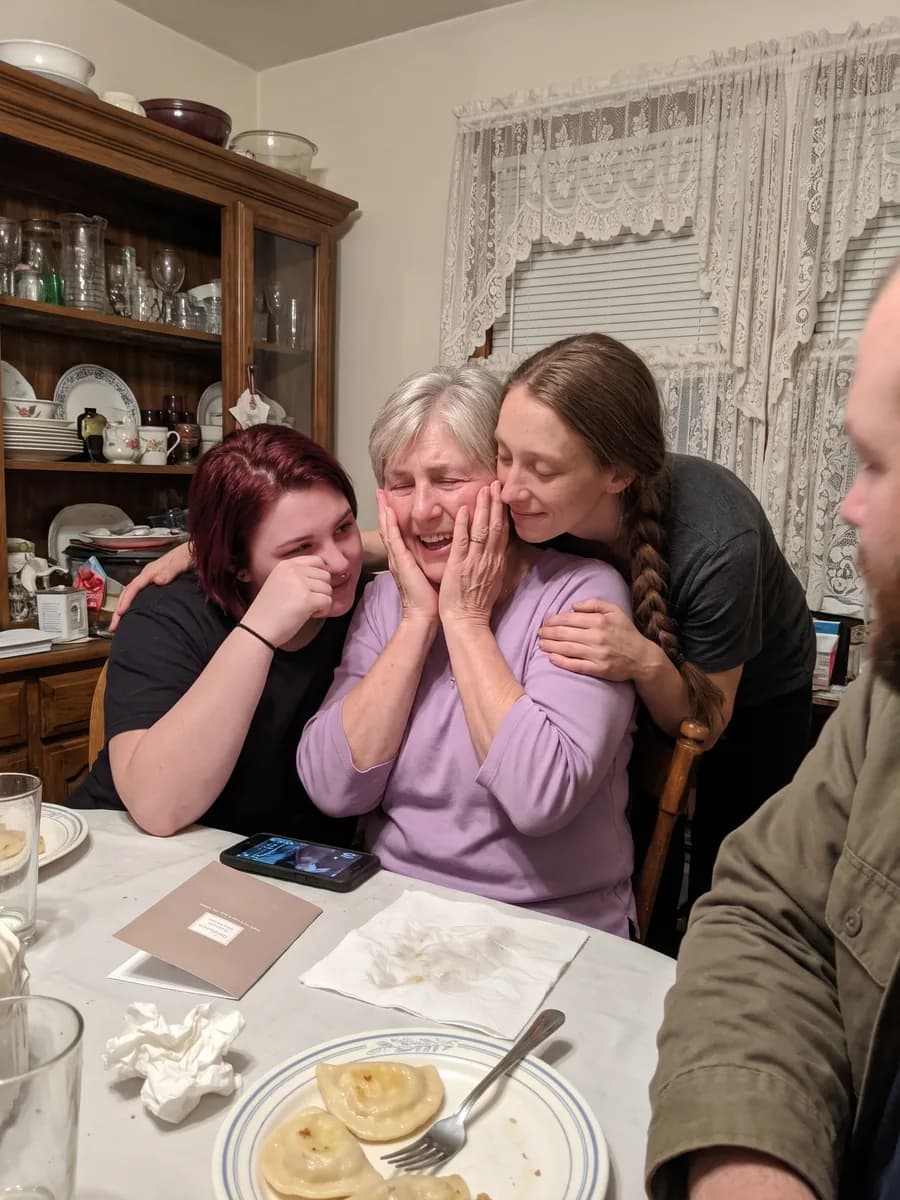
Listen to a thank-you song
Each of you remembers a different mom
Siblings grow up with different versions of the same mother. The oldest remembers the lean years and the small apartment. The youngest remembers her after things eased, with more time and more patience. Whoever lives closest now knows the mom who still drives over with soup. Every version belongs in the song.
Collect them out loud instead of in writing. Set up a 20-minute call with your siblings, without her, and have one person ask each of you three questions and take notes:
- What's one thing she did for you that you only understood once you were grown?
- When did you see her exhausted, and what did she do anyway?
- What does she still do for you that she doesn't have to?
People tell better stories talking than typing. The pauses, the "oh, and remember when," the sibling who corrects the year: that's where the best memories surface. Record the call if everyone agrees, so the note-taker can listen instead of scribbling.
Say you're one of three. Your older sister remembers Mom walking her to the bus stop in the dark before a 6 a.m. shift. Your brother remembers her learning to throw a spiral so he'd have someone to practice with. You remember the Sunday phone calls that started when you moved away and never once stopped. That's three sides of her, and three reasons to say thank you.
The sacrifices she never mentions
The hard part of thanking a mom is that she won't call any of it a sacrifice. Ask her and she'll say she didn't give anything up. So you have to find them yourselves, and name them gently.
Look in these places:
- Her work. The promotion she passed on because of school pickup, the second job, the night shift that let her be home when the bus came.
- Her money. The coat she wore for a decade so you could have new cleats, the vacation that quietly became your braces.
- Her time. The choir she quit, the garden she let go, the friends she saw less of while you were small.
- Her plans. The degree she paused, the city she didn't move to, the business she meant to start once you were grown.
- Her comfort. The smallest slice of cake, the worst seat in the car, the last one to bed every night.
Some of these you'll know. For the rest, ask the people who knew her then: her sister, her oldest friend, your dad. They'll often tell you things she never would. Say her sister mentions, almost in passing, that your mom sold her piano the year money was tight and told everyone she'd stopped playing anyway. That's the line the whole table will remember.
Then run each one through a simple test: would she want this said at the dinner table, in front of everyone who'll be there? Say each one as thanks, not as a debt: "we saw it" rather than "we owe you." If something still hurts her, like a divorce or a hard year she doesn't talk about, leave it out. How that part of her story gets told is her call.
Turning everyone's memories into one song
Pick one sibling to fill in the questions, which takes about three minutes. Choose Mom as the recipient and Thank you as the occasion. In the memories, use one moment from each of you and one or two of the sacrifices. In the dedication, sign every name. One song can include several names, so each of you can be in it.
Resist turning it into a list. Five sacrifices in a row can sound like an invoice. A song that moves between a memory and a thank you sounds like a family telling her what she meant to them.
Let her own music choose the sound. If she sang along to 70s Country while folding laundry, choose Country and the 70s era. If she likes things slow and quiet, Acoustic keeps the words up front. And if Spanish is the language she raised you in, answer the questions in Spanish, and her song will be written in Spanish.
Playing it at a family dinner
Pick a dinner where she doesn't have to cook: her birthday, a Sunday when everyone is in town, the night after a graduation. If she always insists on cooking, cook anyway and give her the chair facing the room.
Then go around the table. Before the song plays, each of her grown kids says one sentence of thanks, oldest to youngest, in their own words. That part is the gift. The song comes after, to hold what you just said.
- Keep each sentence specific. "Thank you for every bus stop in the dark" lands harder than "thank you for everything."
- Agree on the order ahead of time, so nobody freezes and nobody gives a speech.
- Let the youngest press play right after their own sentence, so the thanks flows straight into the song.
- If someone can't make it, have them text their sentence to whoever sits next to her, to read in their place.
- When the song ends, stay quiet. Let her speak first, even if it takes a minute.
If she hates being the center of attention, shrink it: just her kids, at her own kitchen table, after the grandkids are in bed. The thank you counts the same.
Thank her together
When everyone's memories are in, start Mom's thank you song. We write her song from your answers.
Your song from Only Happy Tears comes with lyric artwork with a scan-to-play code. Print it and set it at her place before dinner, so later she can scan it and hear her song again at home. And if a sibling wants to change a line after the first listen, there are unlimited revisions until it's perfect.
Frequently Asked Questions
What is a good thank you gift for Mom?
One that names what she did. A handwritten letter listing specific moments, a day where her kids handle everything she usually handles, a framed photo from a year she held the family together, or a song built from a memory from each of her kids all say thank you better than something generic, because each one proves you noticed.
How do you thank your mom for everything she sacrificed?
Name one or two sacrifices specifically, say what each one made possible for you, and say thank you without adding guilt or an apology. She may not think of them as sacrifices at all, so keep it light enough that she can accept it. Saying it face to face, even in a sentence, matters more than how polished the words are.
Is a thank you gift for Mom only for Mother's Day?
No. Mother's Day is a natural moment, but a thank you with no occasion can mean more, because nothing on the calendar asked for it. Her birthday, her retirement, the week after she helped with a new baby or a move, or a dinner when all her kids happen to be in town are all good times to say it.
What if one sibling doesn't want to join in?
Go ahead without pressure, and keep the door open. Tell them what you're planning, offer them a line, and leave room for their name in the dedication in case they change their mind. A thank you from most of her kids still means a great deal, and a gift that started a family argument won't feel like a thank you to her.
What if Mom doesn't like being the center of attention?
Make it smaller. Play the song in the car with one of you, at her kitchen table with only her kids, or send the link with a short message signed by all of you. The thank you still counts if nobody watches her hear it, and some moms take it in better alone, where they can play it twice without anyone noticing.
Seb, founder of Only Happy Tears
Music has carried all of us through the hard days and the happy ones. I started Only Happy Tears after writing a song for my family to tell them how grateful I am. Their first reaction was happy tears. Now I want everyone to be able to give that moment to the people they love, at a price anyone can afford and with no subscriptions.