
Weddings
Custom First Dance Song for Your Wedding
Plan a custom first dance song: order it together or as a surprise, pick a tempo you can dance to, put your story in the chorus, and practice.
By Seb, founder of Only Happy Tears5 min read
In this article
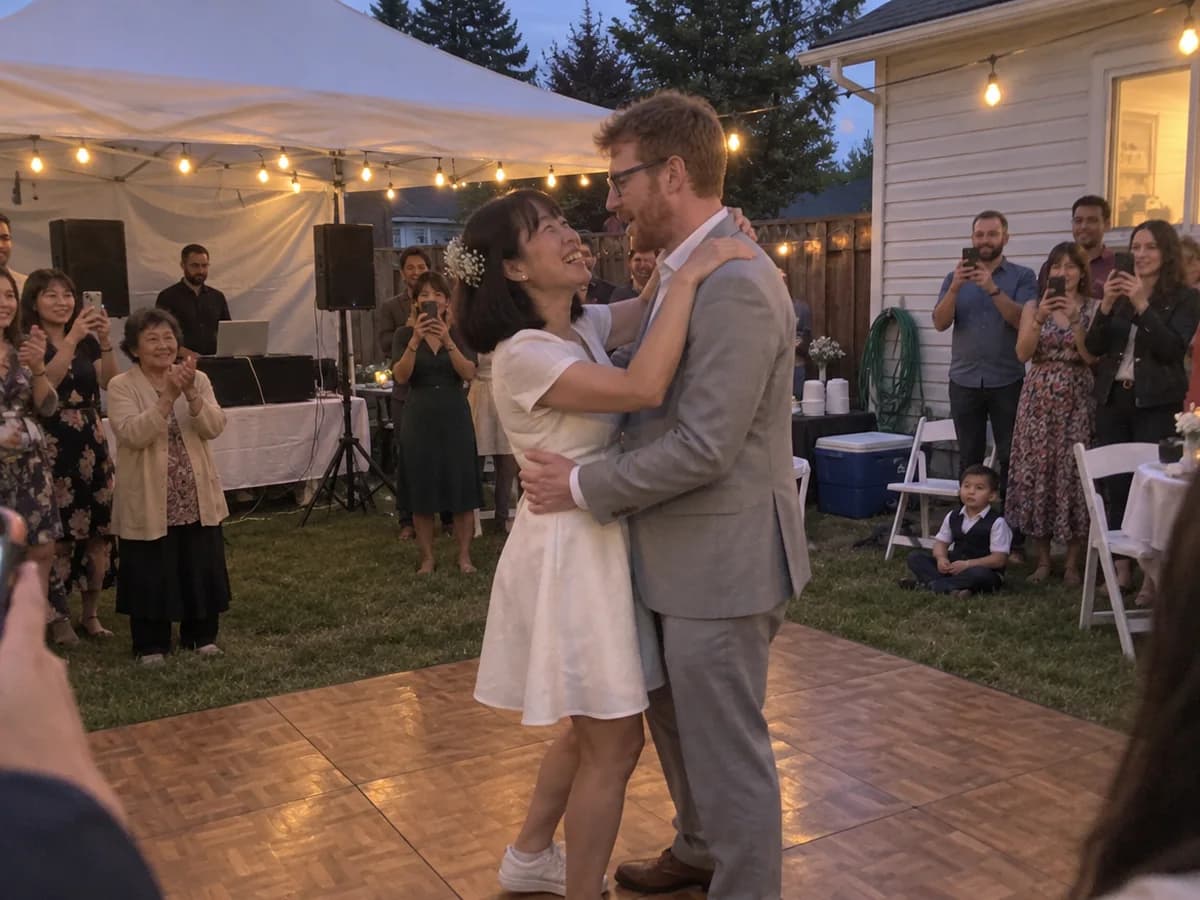
For a few minutes at your wedding, everyone you love will be watching the two of you and nobody else. When the song is written from your own story, the room hears how you got here while you dance.
A custom first dance song tells your story as a couple, so the song everyone hears is about the two of you. Decide whether to order it together or as a surprise, choose a slow tempo, put your most specific shared detail in the chorus, and leave a few weeks to practice to the final version.
Order it together, or surprise your partner?
Settle this first, because it decides how much you can rehearse.
Ordering it together
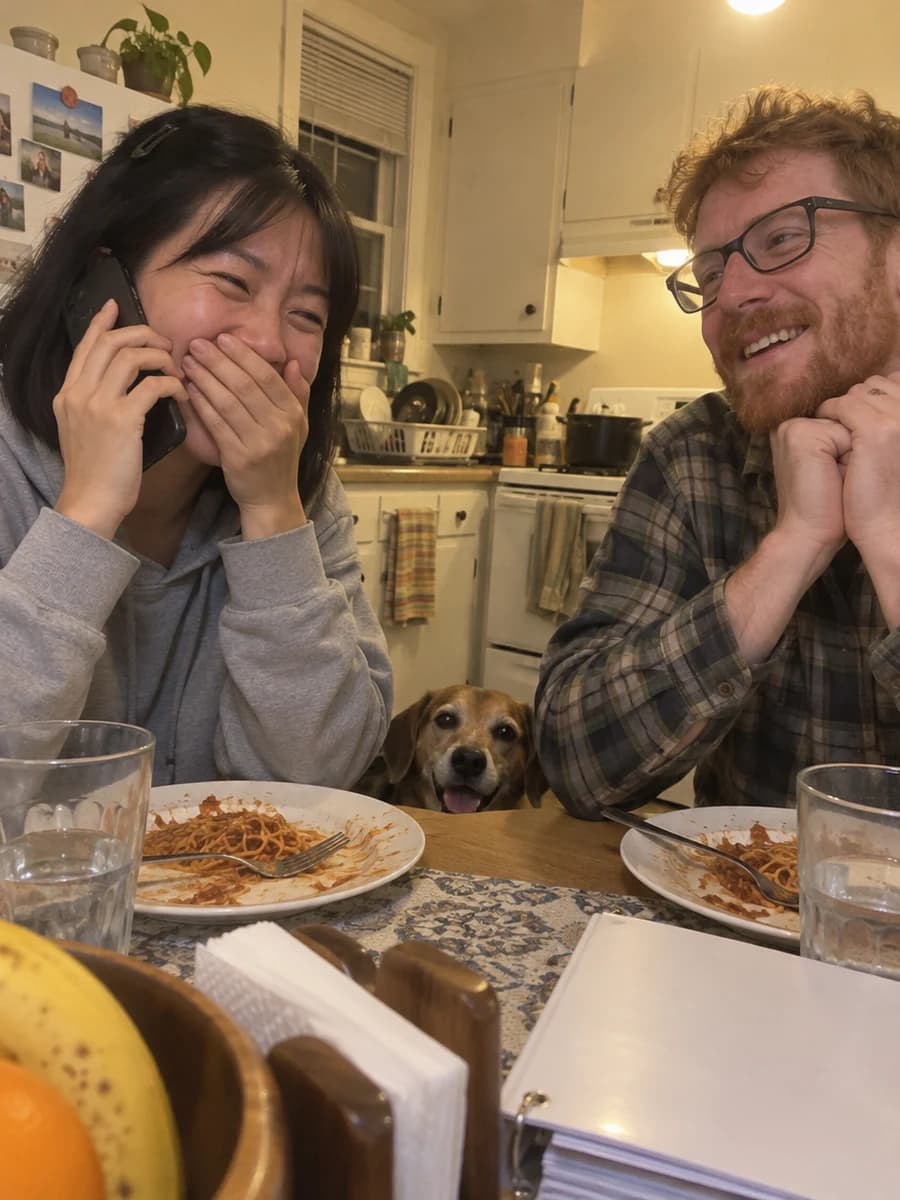
Sit down on a weeknight, answer the questions side by side, and argue happily over which memory goes first. You both hear it early, you both weigh in on changes, and you can start rehearsing as soon as it's final. If you're planning a routine, this is the easier path.
One tip: let one of you type while the other talks. The answers come out sounding like the two of you talking, which is exactly what you want them to sound like.
Surprising your partner
A surprise first dance song is a lovely gesture with one catch: you can't rehearse to a song your partner hasn't heard. Use this rule to choose:
- Planning a dip, a spin or a routine? Order it together. You'll both need the final song to build the steps.
- Planning to sway and talk? A full surprise works. Your partner's first listen happens on the dance floor, and swaying needs no rehearsal.
- Somewhere in between? Reveal it at home a few weeks before the wedding, over dinner or on a long drive. You get the surprise and still have time to practice.
If you go for the full surprise, tell your planner and DJ, and make sure your partner isn't quietly planning a first dance song of their own.
Listen to a wedding song
Tempo and length that work for a first dance
A first dance needs a pace two nervous people can move to in formal clothes, often on a floor they've never stood on. The classics show the range: "At Last" by Etta James is an unhurried sway, and "Perfect" by Ed Sheeran leaves room for a slow turn or two.
Before you order, try a kitchen test. Play a few slow songs you already like and walk a simple box step together. Notice which pace feels like a conversation and which feels like a workout.
Then let that guide your answers. R&B suits a close sway, Jazz a classic ballroom slow dance, Country a two-step, and Acoustic something quiet and simple. For the era, choose the years you met: if you fell for each other over 2000s playlists, pick the 2000s.
On length, many first dances run somewhere between two and three minutes before the DJ fades the music or invites the wedding party to join. Two minutes on a dance floor feels far longer than two minutes on a couch, so don't be shy about a shorter dance. Decide together whether every word gets played or the music fades after the second chorus, and choose your ending before you start practicing, so your last step lands on the last note.
The details from your story that belong in the chorus
The chorus repeats. Whatever goes there is what guests will hum on the way home and what the two of you will hear in your heads for years. Let the verses tell the story in order, and save the chorus for the one detail that is only yours.
Good chorus material is short, concrete and true of both of you:
- The place where it started: the bus stop, the bar with the broken jukebox, the dorm laundry room.
- A phrase you say to each other that nobody else uses.
- The thing you always do: the Sunday crossword, the late-night taco run, the same booth at the same diner.
- The dog or cat who picked you both.
- A promise you've already kept, not only the ones you're making that day.
Keep two things out of the chorus: anything guests would need explained, and anything that only makes sense to one of you. Both can live in a verse, or nowhere.
The verses can hold the longer stories: how you met, the first date, the proposal, the hard year you came through together.
Say you met reaching for the last copy of the same paperback at a used bookstore, and you still argue about who saw it first. Sung, that argument makes a great chorus: guests laugh the first time, and by the third time it's the most romantic line in the room. That kind of detail is what an Only Happy Tears custom song is built around.
If you can't choose between two details, pick the one your friends would recognize right away.
Practicing to your song
Aim to have the final version a few weeks before the wedding, after you've listened and asked for any changes, so every practice is to the song you'll hear that night. A handful of short sessions is plenty for a simple dance.
- Just listen. Sit on the couch and play it twice. Let yourselves react before anyone starts counting.
- Mark three moments. Where you start, where you turn or dip, where you finish. Tie each one to a line in the song rather than a count, so nerves can't knock you off.
- Measure the floor. Ask the venue how big the dance floor is, tape out the shape at home, and practice in the shoes you'll wear.
- Film one run-through. Watch it once, fix one thing, and stop for the day.
- Wedding week: one last run, then leave it alone. Send the DJ the same MP3 you practiced to, with your chosen ending.
If you're taking lessons, bring the downloaded MP3 to the first one, so your instructor builds the steps to your song instead of a stand-in.
On the night, look at each other, not at your feet. If you lose a step, keep swaying until the next line you marked. Nobody but the two of you will know.
Your first dance, written from your story
Sit down together, or alone if it's a surprise, and start your first dance song. Choose Partner, Wife or Husband as the recipient and Wedding as the occasion. Answering takes about three minutes, and we write your song from your answers.
Free to start, so you can answer the questions tonight and decide later. Unlimited revisions until it's perfect, which matters when you're about to learn every beat of it.
Frequently Asked Questions
When should we choose our first dance song?
Earlier than you might think, especially with a custom song. If you plan to take lessons or learn a routine, aim to have the final version a couple of months before the wedding. If you only plan to sway, a few weeks is enough to listen, ask for changes, practice a few times and get the file to your DJ. Leave extra room if the last month is already full.
Do we need dance lessons for our first dance?
No. Plenty of couples sway in a slow circle and look wonderful, because guests watch your faces more than your feet. Lessons help if you want a dip, a spin or a routine, or if one of you is nervous and wants a plan. Even one or two lessons can give you a simple structure, and bringing your own song means the steps fit it.
Do we have to have a first dance at our wedding?
No. Some couples skip it, open the floor to everyone from the first note, or trade it for a private last dance at the end of the night. If the spotlight makes you both uneasy, a song about you can still have its moment: play it during dinner, or late in the evening with only your closest people on the floor.
Can our first dance song mention our kids or our dog?
Yes. Several names can go into one song, so a blended family can hear every child named, and the dog who sleeps between you can get a line too. If the kids will join you on the floor partway through, mentioning them in the song makes a natural cue. Tell the DJ ahead of time so nobody is caught off guard.
What if we can't agree on what goes in the song?
Split it. Each of you picks one memory that has to be in the song, then choose the rest together. If you still disagree, give the detail to whoever cares about it most and move the other into a verse. Once you hear the song, anything that doesn't land can be swapped when you ask for changes.
Seb, founder of Only Happy Tears
Music has carried all of us through the hard days and the happy ones. I started Only Happy Tears after writing a song for my family to tell them how grateful I am. Their first reaction was happy tears. Now I want everyone to be able to give that moment to the people they love, at a price anyone can afford and with no subscriptions.